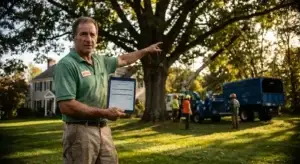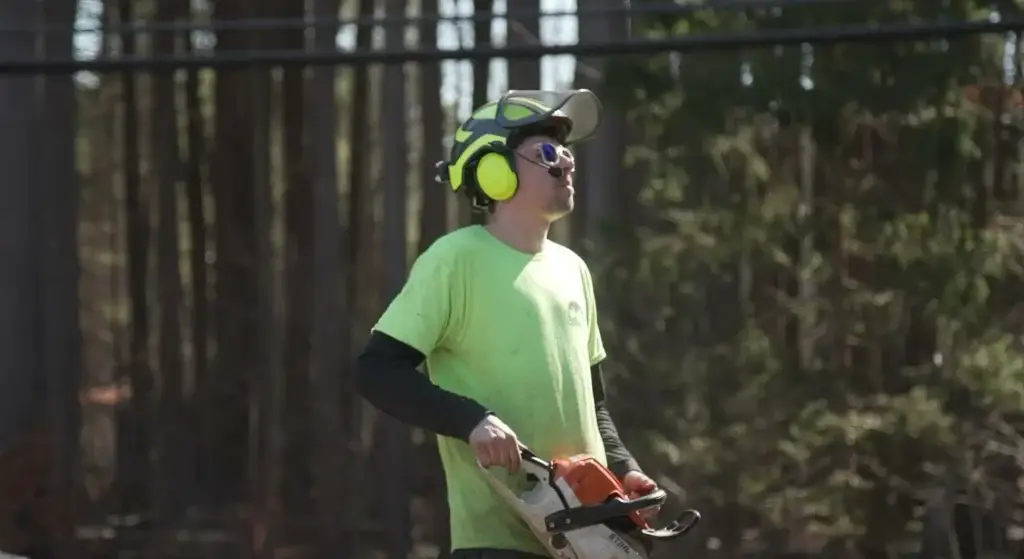
If you have typed certified arborist near me into Google, you already know something most homeowners never think about until a tree is leaning over their roof: not every guy with a chainsaw and a magnetic sign on his truck should be climbing your maple. The credential matters. It changes what happens on your property, who is liable when something goes wrong, and whether the tree next to your house is still standing in five years.
I am Matt Webb. I run Webb Tree Services out of Canton, CT, and I hold a degree in Arboriculture and Landscape Management from Paul Smith College. I am writing this because I am tired of watching my neighbors get burned by crews who do not know the difference between a codominant stem and a decurrent branch. Here is the plain version of what the credential means and how to check it.
What is a certified arborist and why does it matter
A certified arborist is a tree care professional who has passed an exam administered by the International Society of Arboriculture, known as the ISA. The exam covers tree biology, diagnosis of pests and disease, pruning standards, cabling and bracing, soil science, and safe work practices. To sit for it, you need at least three years of full-time tree care experience or a degree in arboriculture or a closely related field. After you pass, you have to earn continuing education credits every three years to keep the certification active.
That matters for three reasons that hit your wallet directly.
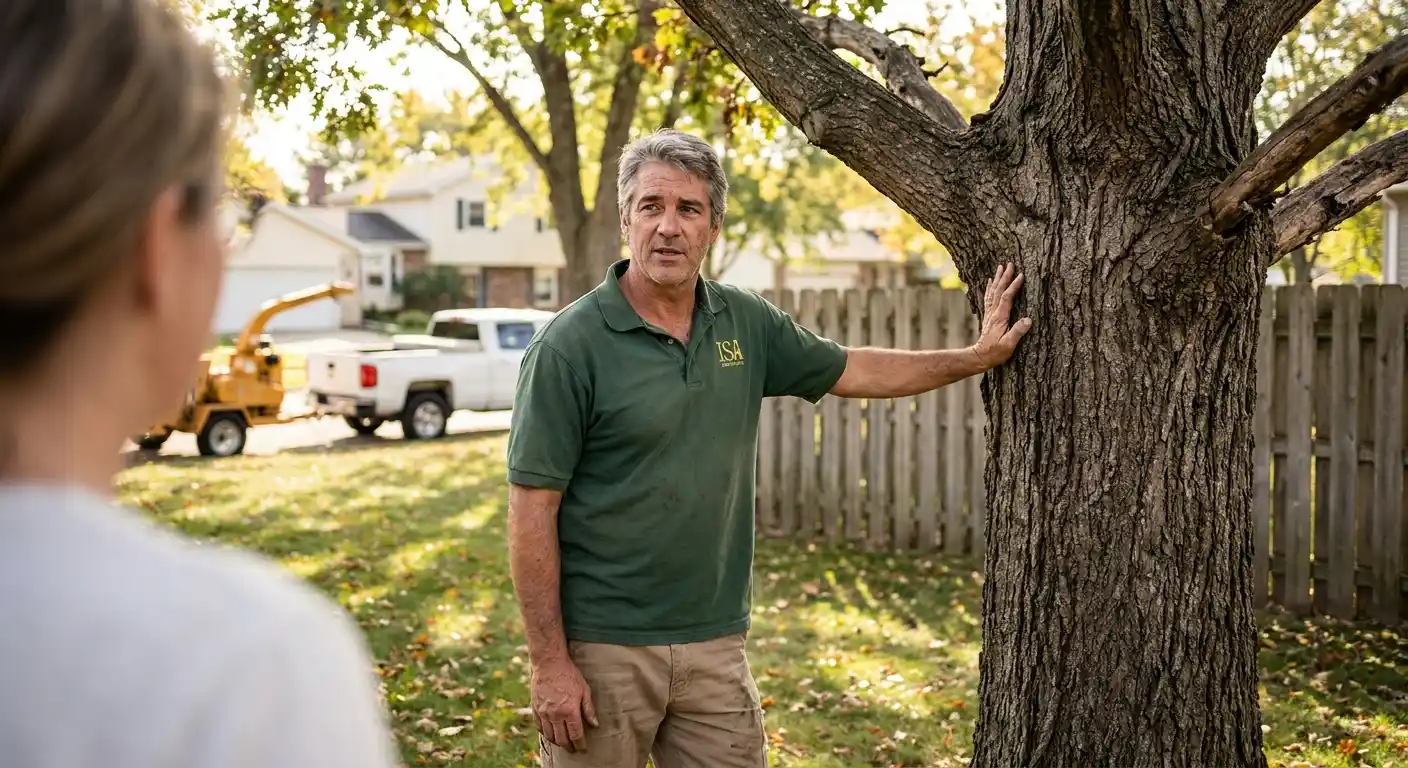
- Diagnosis before removal. A trained arborist can often save a tree that a chainsaw crew would cut down. Removing a mature oak costs you shade, curb appeal, and about $15,000 in replacement value that a proper pruning could have preserved.
- Correct cuts. Improper pruning cuts create entry points for decay and pests. A tree topped by an untrained crew is a tree you will pay to remove in four to seven years.
- Risk assessment. A certified arborist can tell you which trees are actually hazardous and which ones look scary but are structurally sound. That distinction saves you money on removals you did not need and prevents disasters from trees you thought were fine.
How do I find a certified arborist near me
Start with the ISA’s official directory at treesaregood.org. You plug in your zip code and it returns every ISA certified professional in your area, including their certification number. That number is the key to everything I am about to tell you.
Once you have a shortlist, cross-reference against a few practical filters:
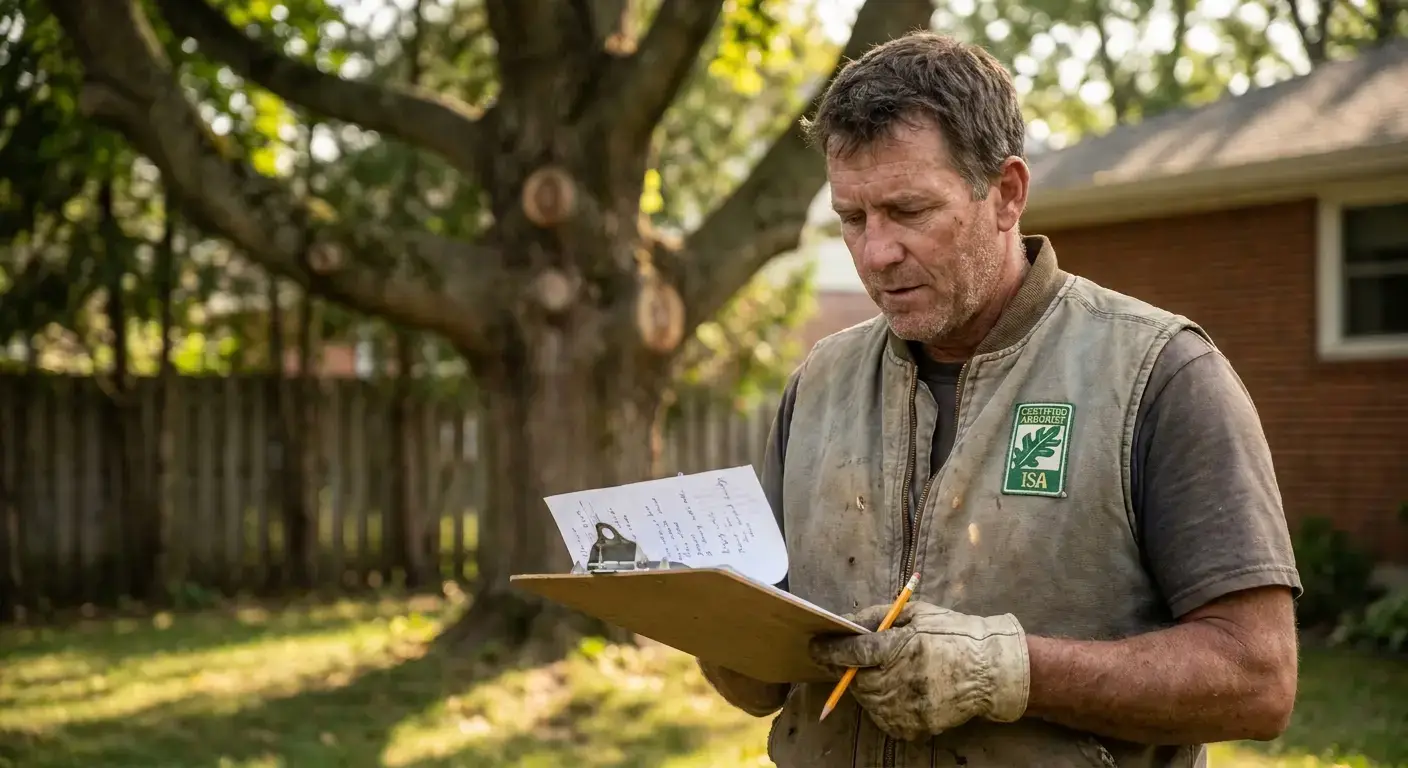
- Do they answer the phone with a human voice, especially after a storm?
- Do they carry at least $1M in general liability plus workers compensation? Ask for a certificate of insurance emailed directly from their insurance agent, not a PDF the company sends you.
- Do they own their heavy equipment, especially a crane, or do they subcontract it? Owned equipment means the crane operator works for the arborist and follows the arborist’s plan.
- Are they local? A Canton or Hartford County based company knows which species struggle in our clay soils, which neighborhoods have overhead utility conflicts, and how to work around the tight lot lines in towns like Simsbury and West Hartford.
Red flags to walk away from
If a company knocks on your door after a storm offering a cash discount for immediate work, close the door. Legitimate arborists are slammed after storms and are not driving neighborhoods hunting for panicked homeowners. If they cannot produce a certification number when asked, they are not certified. If they want a large deposit before any work begins, that is a scam pattern, not a business practice.
What is the difference between a certified arborist and a regular tree service
A regular tree service is a business that removes trees. That is it. There is no required schooling, no exam, no continuing education. In Connecticut, you do need a state arborist license to perform tree care work commercially, but the bar for that license is lower than the ISA credential, and enforcement is thin.
The practical difference shows up in four places:
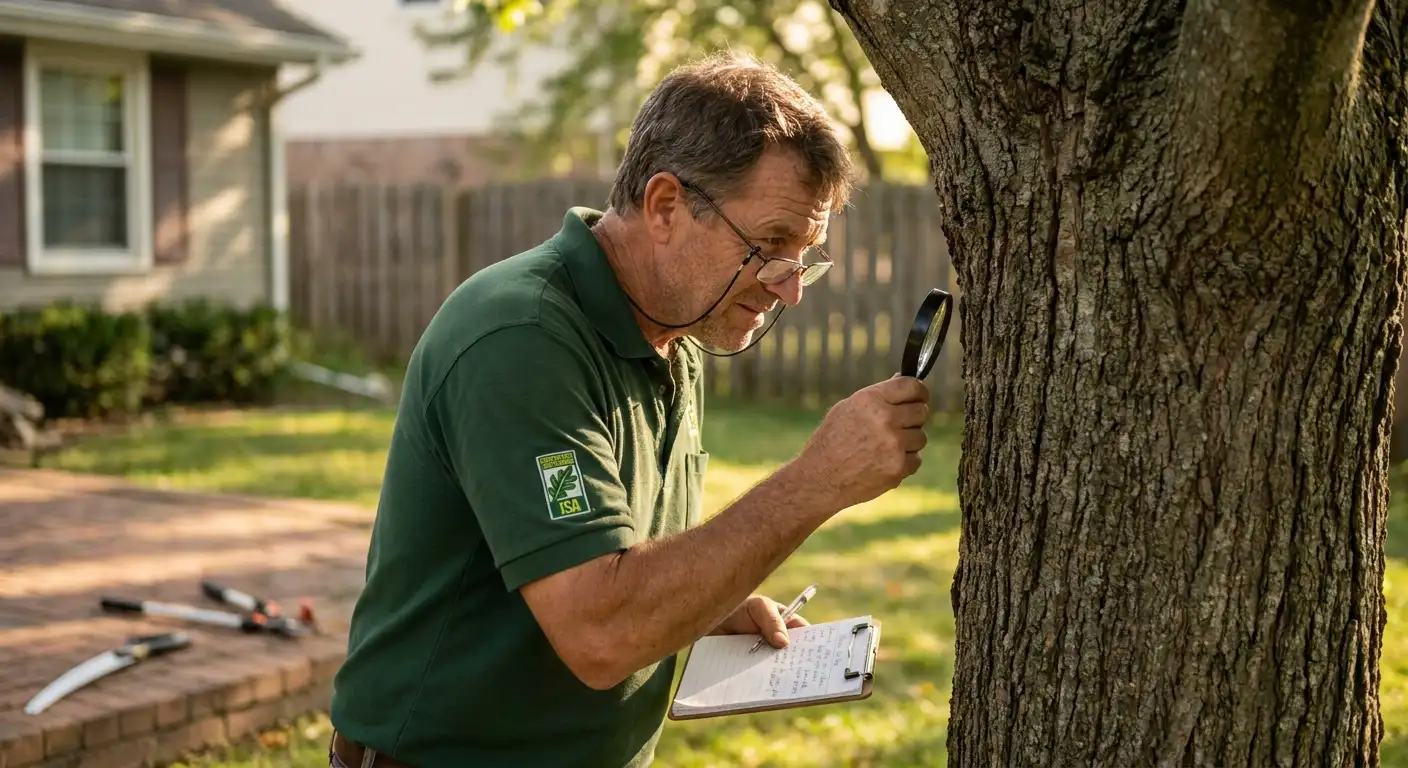
- The estimate. A certified arborist will walk your property, identify each tree by species, and explain what is structurally wrong or right about it. A chainsaw crew quotes a flat number and moves on.
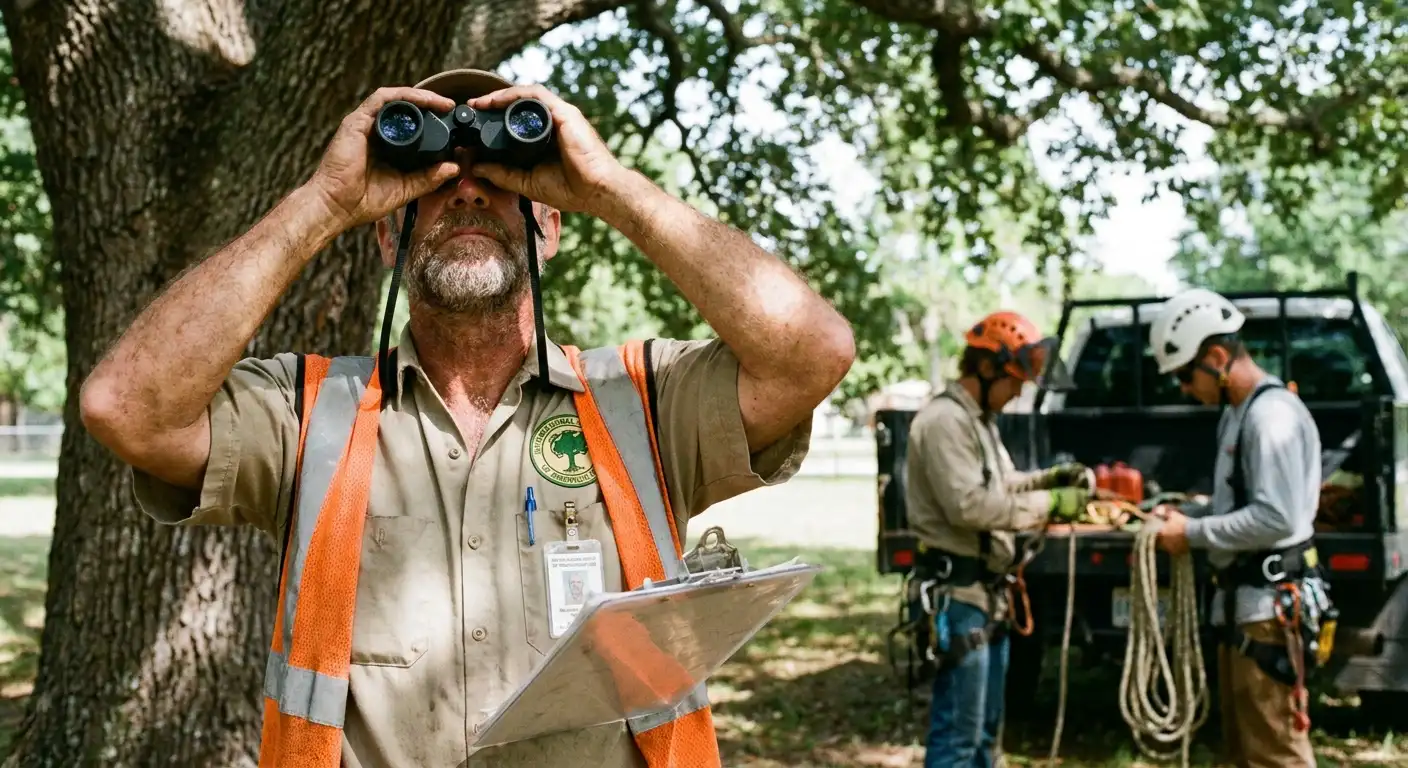
- The plan. A trained arborist maps out crane placement, rigging points, drop zones, and cleanup path before the first cut. An untrained crew starts cutting and figures it out as they go. Guess which one damages your septic field.
- The cleanup. Insured, credentialed crews haul everything off and leave your lawn intact. Bargain crews leave ruts, sawdust piles, and half-buried logs behind the shed.
- The follow-up. If something goes wrong six months later, a real business is still around to make it right. A guy operating out of a pickup truck is not.
How do I verify that a tree company is actually certified
This is the step almost nobody takes, and it is the one that protects you. Go to the ISA’s verification page at isa-arbor.com/Credentials/Verify-Credentials, enter the certification number the company gave you, and confirm it is active and in the name of the person who will be on your job.
Also ask these three questions in writing, by email or text, so you have a record:
- What is your ISA certification number and the name it is registered under?
- Can your insurance agent email a certificate of insurance directly to me at [your email], listing my address as certificate holder?
- Will the certified arborist be on site during the work, or is the credential only used for marketing?
That third question weeds out most of the fakes. A lot of companies employ one certified arborist who signs off on estimates but never sets foot on the actual job. You want the credentialed person on the property when the wood starts falling.
Why this matters more in Connecticut than most places
Our tree canopy is old and dense. Hartford and Litchfield counties are full of mature white pines, red oaks, and sugar maples that were planted or seeded in the mid twentieth century and are now sixty to a hundred feet tall, right next to houses that were built when those trees were saplings. Add nor’easters, wet snow events, and the emerald ash borer wiping out ash trees across the region, and you have a lot of high-consequence removals sitting in tight suburban yards.
According to the Arbor Day Foundation, the emerald ash borer alone has killed hundreds of millions of ash trees in North America since 2002. Every dead ash near a house is a hazardous removal that requires a plan, not a chainsaw and hope. That is exactly the work a formally trained arborist is built for. If you are dealing with storm damage right now, we have already documented what fast credentialed response looks like on our Torrington storm page.
What to do next
Look up two or three certified arborists near you on the ISA directory. Verify their credentials. Ask for insurance certificates emailed directly from the agent. Get written estimates that identify each tree by species and describe the plan. Then choose the one that shows up on time to walk your property, answers your questions plainly, and does not try to rush you into a decision.
If you are in Hartford or Litchfield County and want a walk-through from a degreed arborist who owns his crane and answers his own phone, request a free estimate and I will come see the tree in person. Straight answers, written price, no pressure.
Pattern: New for webb-tree. Date: 2026-06-02.