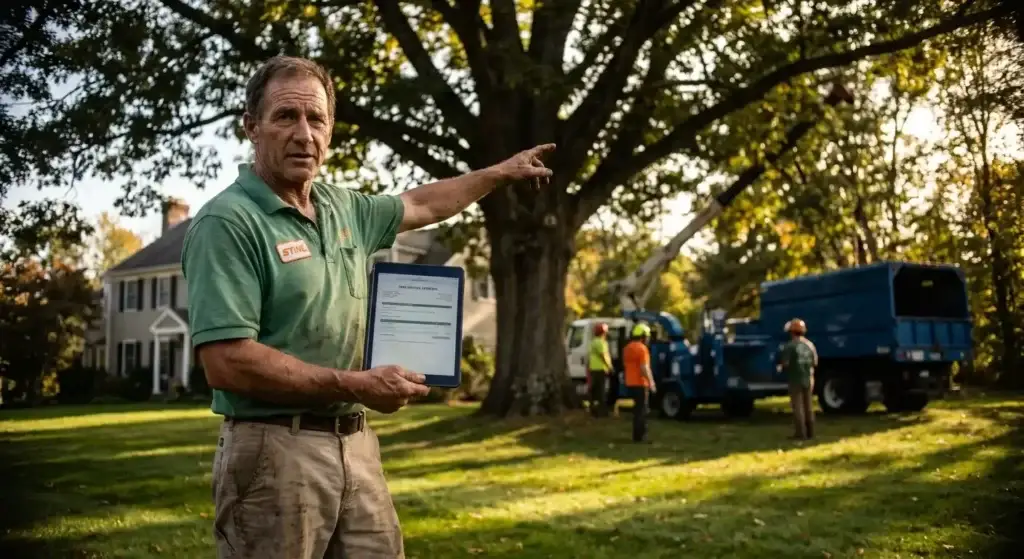
Most homeowners in Hartford County who start calling around learn fast that the large tree removal cost they get quoted swings wildly, sometimes by thousands of dollars for the same job. One guy shows up in a pickup and says $600. The next crew brings a crane and quotes $4,800. That is not a scam, and it is not price gouging. It is the difference between what a job actually requires and what a chainsaw-and-a-truck operation is willing to gamble on. This guide breaks down what a fair price looks like before you call anyone.
How Much Does It Cost to Have a Large Tree Removed?
In Connecticut, a large tree removal typically runs between $1,200 and $6,500. That range covers most jobs on trees between 60 and 100 feet tall. Straightforward removals on trees in open yards land on the lower end. Hazardous removals over houses, power lines, or on tight lots with poor access push toward the top of the range and beyond. Trees over 100 feet, especially white pines and mature oaks common in northwest Connecticut, can run higher when they require a crane and multiple crew days.
Here is a rough breakdown by size for healthy trees in reasonable access conditions:
- 60 to 75 feet: $1,200 to $2,800
- 75 to 90 feet: $2,500 to $4,500
- 90 to 100 feet: $3,800 to $6,500
- Over 100 feet or multi-day jobs: $6,000 and up
These numbers assume the tree is alive, structurally sound enough to climb or crane safely, and located where equipment can reach it. Change any of those variables and the price moves. That is where the confusion usually starts.
What Makes Large Tree Removal More Expensive Than a Small Tree?
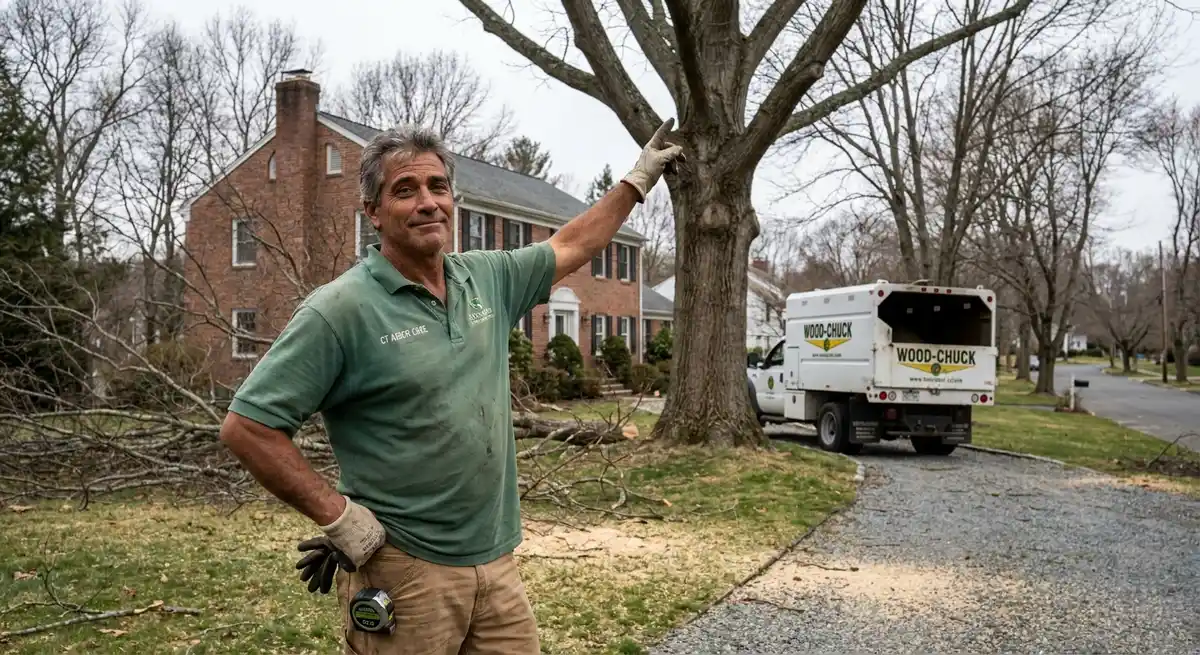
It is not just size. It is what size forces the crew to bring, plan, and insure against. A 30-foot tree in a backyard is a two-person, half-day job with a chipper. A 90-foot white pine leaning toward a bedroom is a different animal entirely.
Height and Weight
A tree that is twice as tall is not twice the work. It is often four or five times the work. Wood volume goes up faster than height, and every additional foot means longer rigging lines, more controlled cuts, and more time in the tree. A large white pine can weigh 15,000 pounds or more. That weight has to come down in pieces small enough to control and heavy enough to justify the equipment on site.
Equipment Required
The biggest single factor in a large tree removal cost is whether the job needs a crane. Renting a crane and operator for a day in Connecticut runs $1,800 to $3,500 alone. A company that owns its crane (rather than sub-renting one) can price more competitively and schedule faster. On tight residential lots in towns like Simsbury, Avon, and West Hartford, a crane is often the safest and only option for large removals near structures.
Risk and Insurance
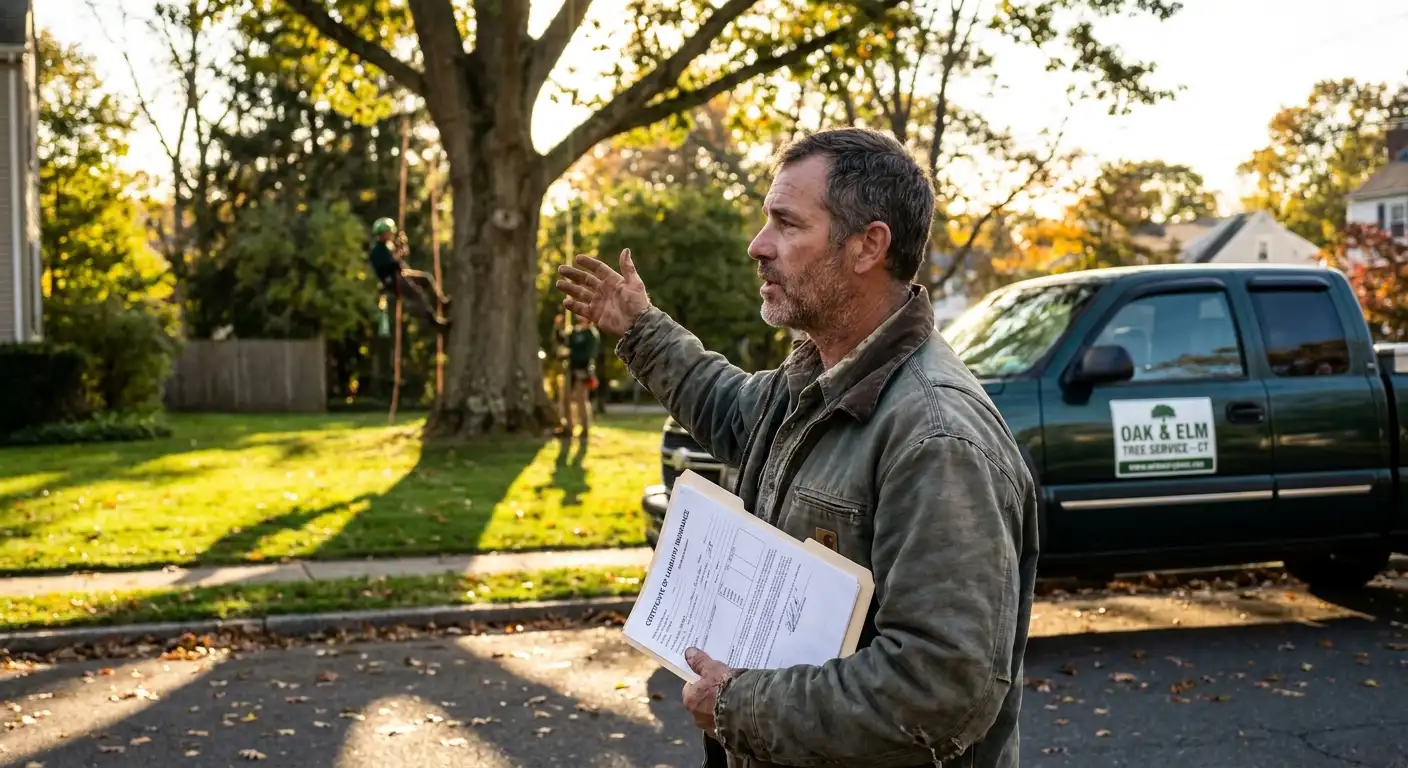
A fully insured tree service carrying $2 million in liability plus workers comp pays real premiums for that coverage. Those premiums are baked into the quote. The pickup truck guy quoting $600 usually is not carrying that coverage, which means if his cut goes wrong and drops a limb through your roof, your homeowners policy is the one on the hook. A properly insured crew is not more expensive because they are greedy. They are more expensive because they are legal.
Access Difficulty
Can the crane park close to the tree? Is there a fence, a septic field, a pool, or a stone wall in the way? Does the crew need to build lawn protection mats across the yard? Every yes on that list adds time and cost. A tree 30 feet from a driveway costs less to remove than the same tree 200 feet back in a wooded lot.
Tree Condition
Dead, hollow, or rotted trees are the most dangerous to remove and often the most expensive per foot. Climbers cannot trust the wood to hold anchor points, so the job usually requires a crane even on trees that would otherwise be simple. Storm-damaged trees with hung-up limbs or partial failures fall into the same category. If you are dealing with storm damage in the Bristol or Torrington area, we cover the specifics of those emergency responses on our Bristol storm page.
Does Debris Haul-Off Cost Extra for Large Tree Removal?
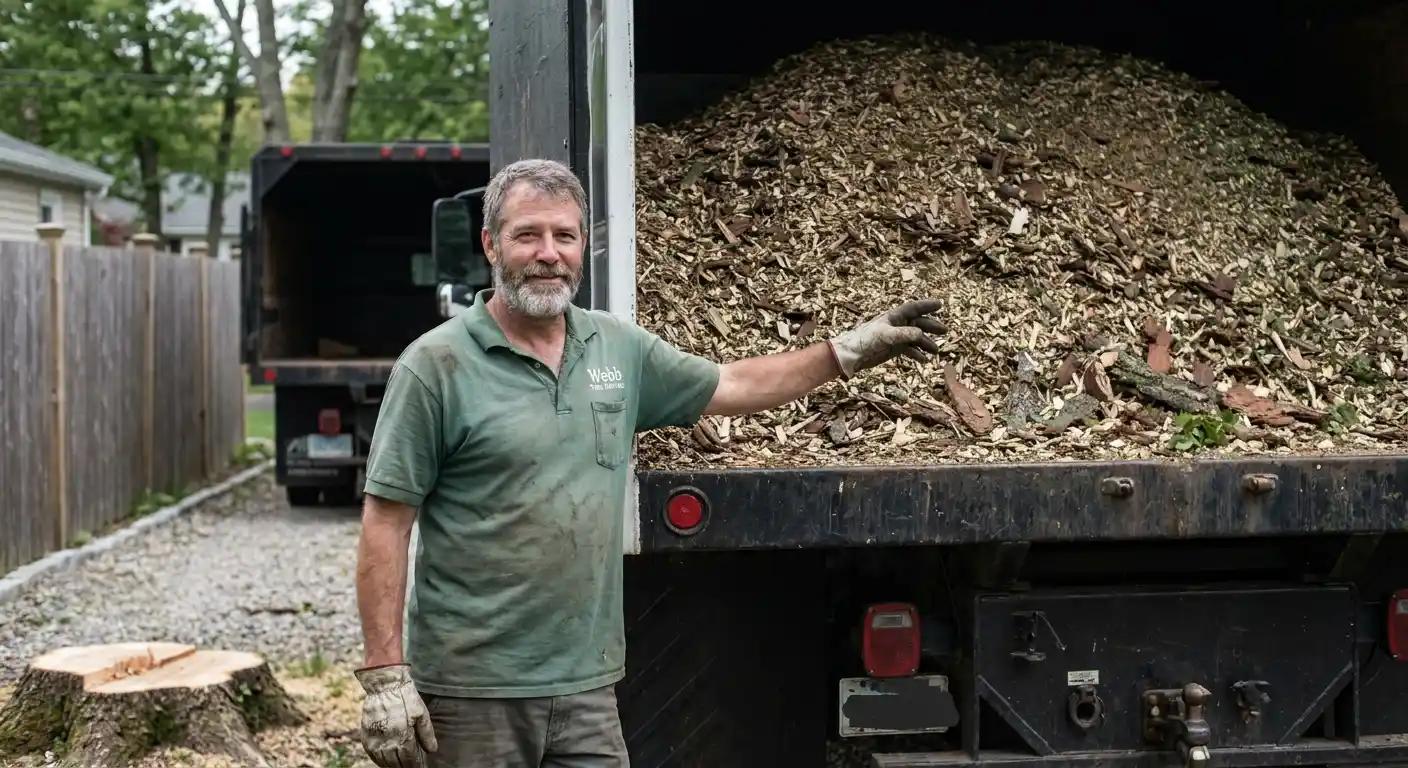
It depends on the company. At Webb Tree Services, haul-off is included in the quoted price for every large tree removal. That is our standard, not an upsell. A large tree can generate three to six truckloads of chipped brush and log wood. Getting rid of that responsibly (chipped for mulch, logs sold or milled, stumps ground or hauled) is a real cost, and companies that unbundle it are usually the ones whose $600 quote balloons to $2,400 by the time the truck leaves.
A few things to ask any crew you get a quote from:
- Is chipping and haul-off of all brush included?
- Are logs cut to firewood length and stacked, hauled off, or left as-is?
- Is stump grinding included, offered as an add-on, or not offered at all?
- Will the lawn be raked and blown clean before the crew leaves?
If any of those answers are vague, the number on the estimate is probably vague too. A written quote that spells out cleanup scope is the single easiest way to compare apples to apples across three different crews.
Stump Grinding as a Separate Line
Stump grinding is often quoted separately because not every homeowner wants it done. Grinding a large stump (over 24 inches at the base) typically runs $150 to $400 per stump depending on depth and root spread. If you want the area replanted with grass or a garden bed, grinding is the right call. If the stump is out of the way and you do not care, skipping it saves money.
How Do I Get an Accurate Quote for Large Tree Removal Near Me?
Three or four clear photos and a phone call are usually enough to scope 80 percent of jobs. Send a wide shot of the tree and property, a close-up of the trunk, one showing what is under the tree (house, driveway, shed, power lines), and one showing crane access from the road. That gives an experienced arborist enough to give you a ballpark on the phone and schedule an on-site walk for a firm written quote.
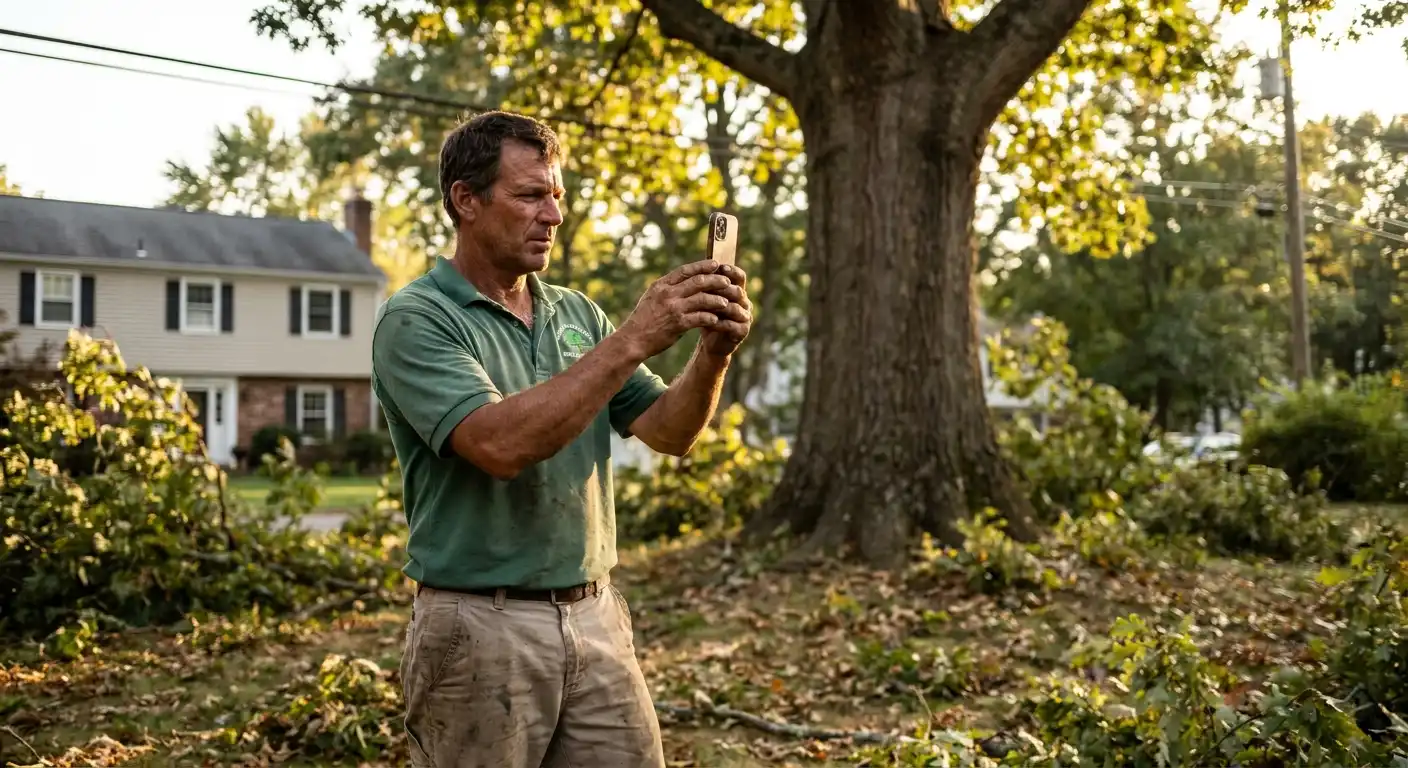
When comparing quotes, look for these markers of a legitimate crew:
- Written estimate on company letterhead, not a handshake number
- Proof of $1 million or more in liability insurance plus workers comp
- Clear scope: what comes down, what gets hauled, what stays
- A named lead arborist, ideally credentialed (a degree in arboriculture or ISA certification means the person quoting the job actually knows tree biology, not just how to run a saw)
- References or a portfolio of similar removals in your area
According to the International Society of Arboriculture, hiring a credentialed arborist is one of the single biggest predictors of a safe, well-executed removal. It is worth asking.
When to Book Now Versus Wait
Dead trees, storm-damaged trees, and trees leaning toward structures should be removed immediately. Waiting on a hazardous tree to save a few hundred dollars is how insurance claims start. Healthy trees you are removing for landscaping reasons can wait for the off-season (late winter or early spring) when crews have more availability and quotes tend to come in a bit lower.
If you are in Hartford County or Litchfield County and want a straight number on your large tree removal cost, request a free on-site estimate. Matt walks the property himself, identifies the hazards, plans crane access if the job needs it, and gives you a flat written price. No pressure, no upsells, no surprise fees when the truck leaves.
The right price is the one that gets the tree down safely, the yard cleaned up completely, and your property protected the whole way through. Anything less is not a bargain. It is a gamble.