Storm damage tree removal cost is the first thing most homeowners want to know at 6am when a maple is leaning on the roof. In Hartford County, most storm removal jobs land between $800 and $4,500, with crane-assisted removals on a house or across power lines running $3,500 to $8,000 or more. The final number depends on size, access, hazard, and how fast you need us there.
I’m Matt Webb. I run Webb Tree Services out of Canton, and I’ve pulled trees off houses in Avon, Simsbury, Farmington, West Hartford, and everywhere in between. This is what actually drives the price, what to do in the first hour, and how to handle your insurance carrier so you don’t get stuck paying twice.
What should I do first when a storm drops a tree on my property?
Before you call anyone, do these five things in order:
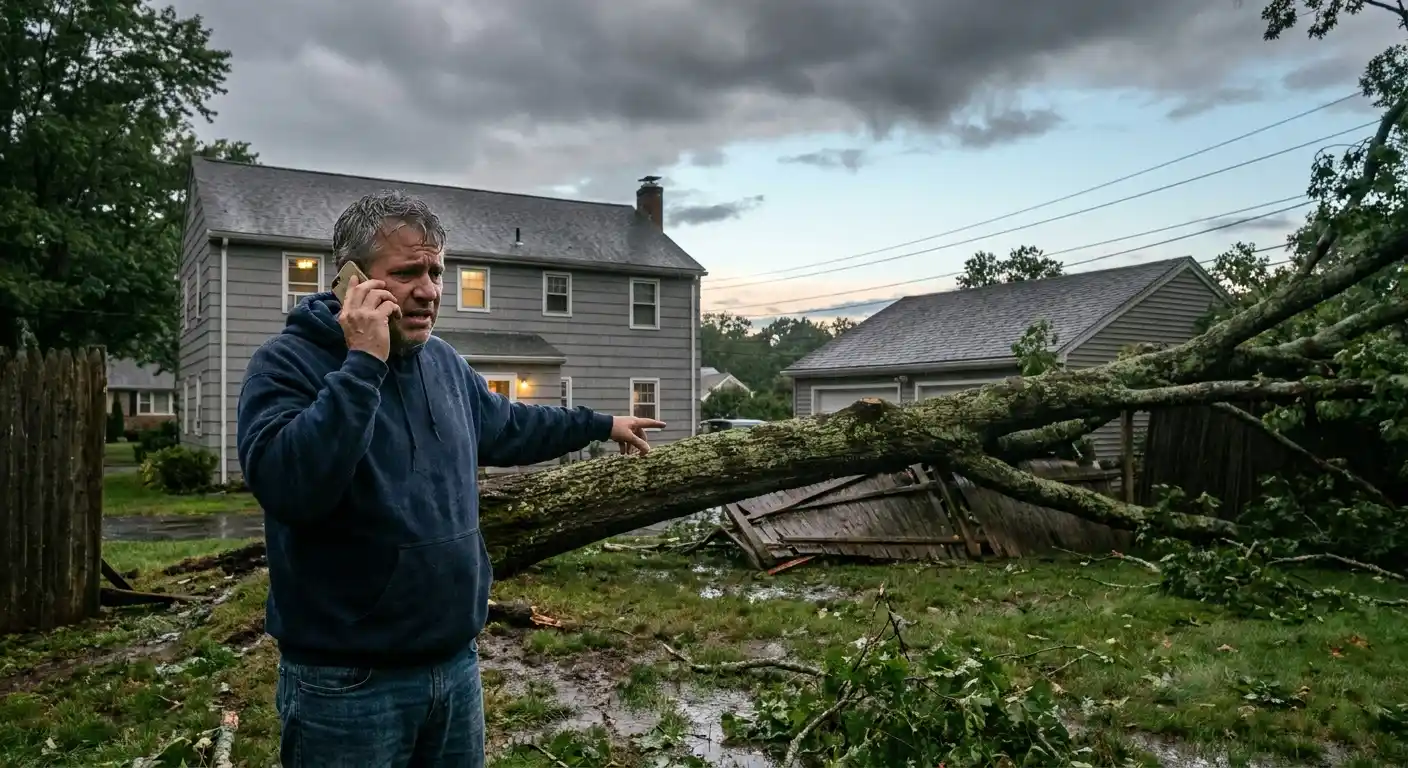
- Get everyone out of the affected part of the house. A tree that looks stable at 7am can shift by noon.
- Do not go near downed wires. Assume every line on the ground is live and call Eversource.
- Take photos from multiple angles. Wide shots, close-ups of the damage, the root ball, the direction of fall. These are your insurance evidence.
- Call a licensed and insured tree service that answers the phone. Not a chainsaw guy with a pickup. Storm work is where people get killed.
- Call your insurance company after you’ve stopped further damage, not before. Tarps and temporary shoring are your responsibility, and they’ll reimburse you.
That order matters. Most homeowners freeze on step four because they don’t know who to call at 5am. That’s why we run a real 24/7 line at (860) 839-2760. Matt or a crew lead picks up. No voicemail, no answering service reading a script.
How much does storm damage tree removal cost in Hartford County?
Here’s the honest range for our service area, based on jobs we’ve done across Canton, Torrington, Bristol, and the rest of the county:
- Small storm-damaged tree in the yard, no structures involved: $400 to $1,200. A single pine snapped in half in an open lawn, easy drop zone, straightforward cleanup.
- Medium tree partially down, blocking a driveway or fence line: $1,000 to $2,800. More rigging, more careful cutting, debris haul-off.
- Large hardwood on a garage, shed, or single-story roof: $2,500 to $5,500. Requires precision cuts, tarping the damaged structure, and often a bucket truck.
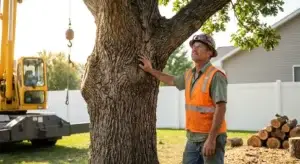
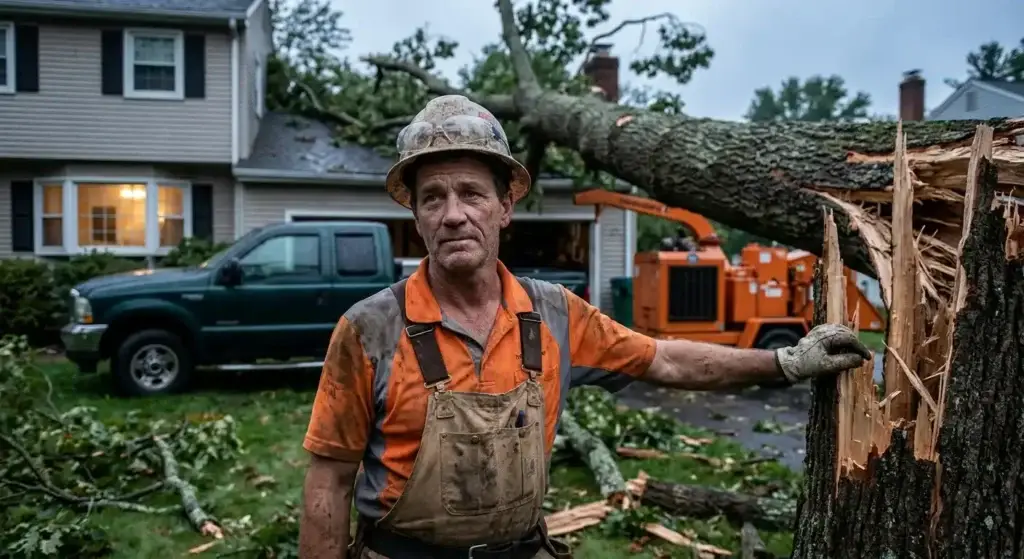
- Crane-assisted removal from a two-story home, over power lines, or in tight access: $3,500 to $8,000 and up. This is where owning the crane matters. We’re not waiting three days for a rental.
- Multiple trees down on one property: Discount off the per-tree rate. We had a job in Bristol after the last microburst where we cleared eleven trees in two days at roughly 30 percent less than pricing them individually.
Four things drive the price up: size of the tree, whether it’s on or near a structure, whether power lines are involved, and how fast you need us. A 90-foot white pine tangled in wires at 3am is not the same job as a birch on the back lawn on a Tuesday afternoon.
What actually drives the storm damage tree removal cost?
Access and equipment
If we can back a bucket truck up to the tree, the job is faster and cheaper. If the tree is in a fenced backyard with a narrow gate, we’re either climbing it in sections or bringing the crane in from the street. That’s the biggest single cost variable. We own our crane, which is why we can quote crane work same-day. Companies that rent get quoted three to five days out.
Hazard level
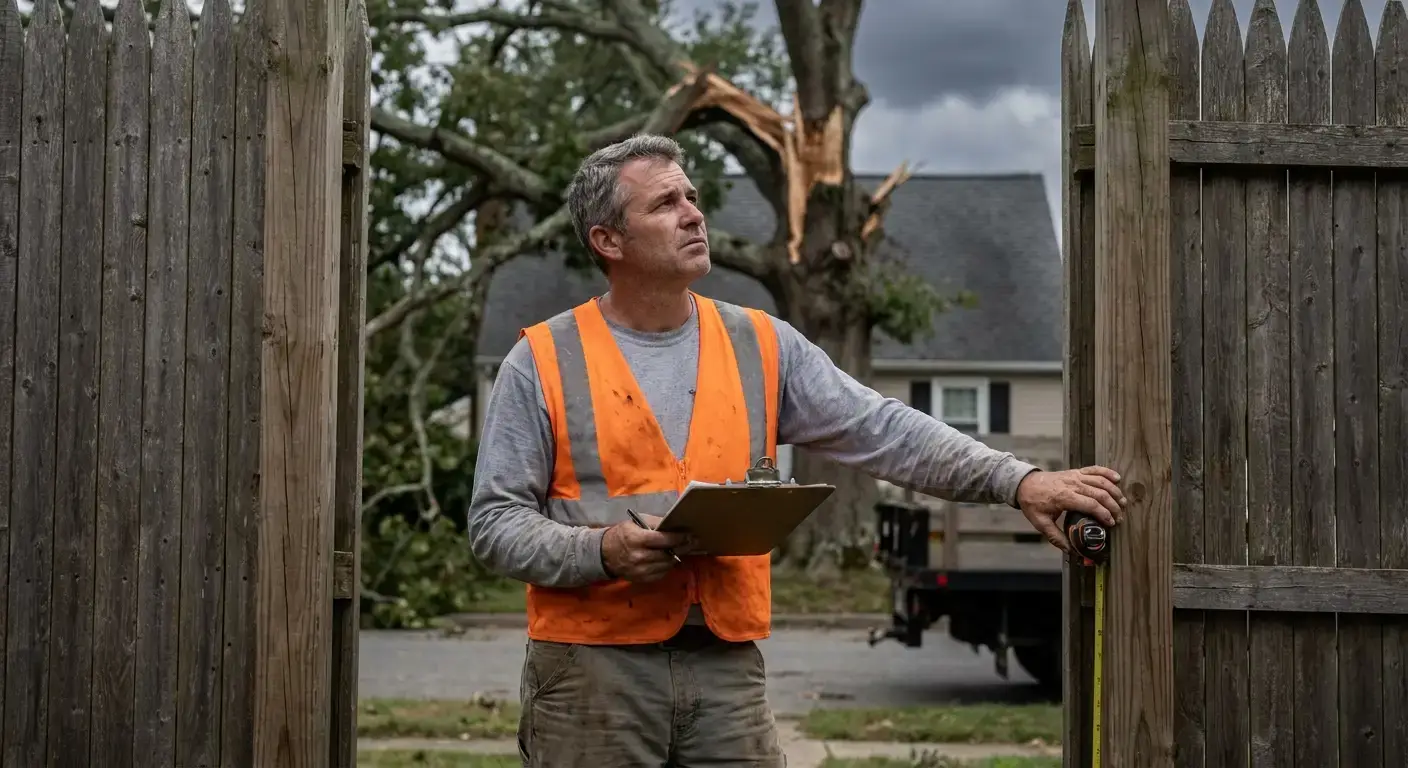
A tree that’s already down is safer to remove than a tree that’s hung up in another tree or leaning under tension. Hangers, spring poles, and root-lifted trees under load require different rigging and take longer. Insurance companies don’t always understand this. That’s another reason to use a certified arborist, not a general contractor.
Debris and cleanup
Full haul-off is standard on our estimates. Some crews leave the wood on your lawn as “your firewood.” That saves them a dump run and leaves you with a two-week cleanup project. Ask what’s included before you sign anything.
Emergency premium
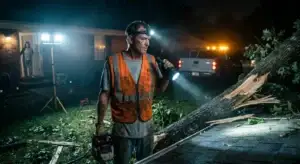
Middle-of-the-night response costs more than a Wednesday morning job. Not because we’re gouging, because the crew is on call, the truck is fueled at 2am, and we’re mobilizing gear in the rain. Expect a 20 to 40 percent premium on true emergency response.
Will my insurance cover storm damage tree removal?
Usually, yes, with some sharp edges. Standard Connecticut homeowners policies typically cover:
- Removal of a tree that has fallen ON an insured structure (house, garage, shed, fence).
- Repair of the structure itself under your dwelling coverage.
- A capped amount ($500 to $1,000 is common) for removal of a fallen tree that didn’t hit anything but is blocking your driveway or a handicap ramp.
What insurance usually does NOT cover:
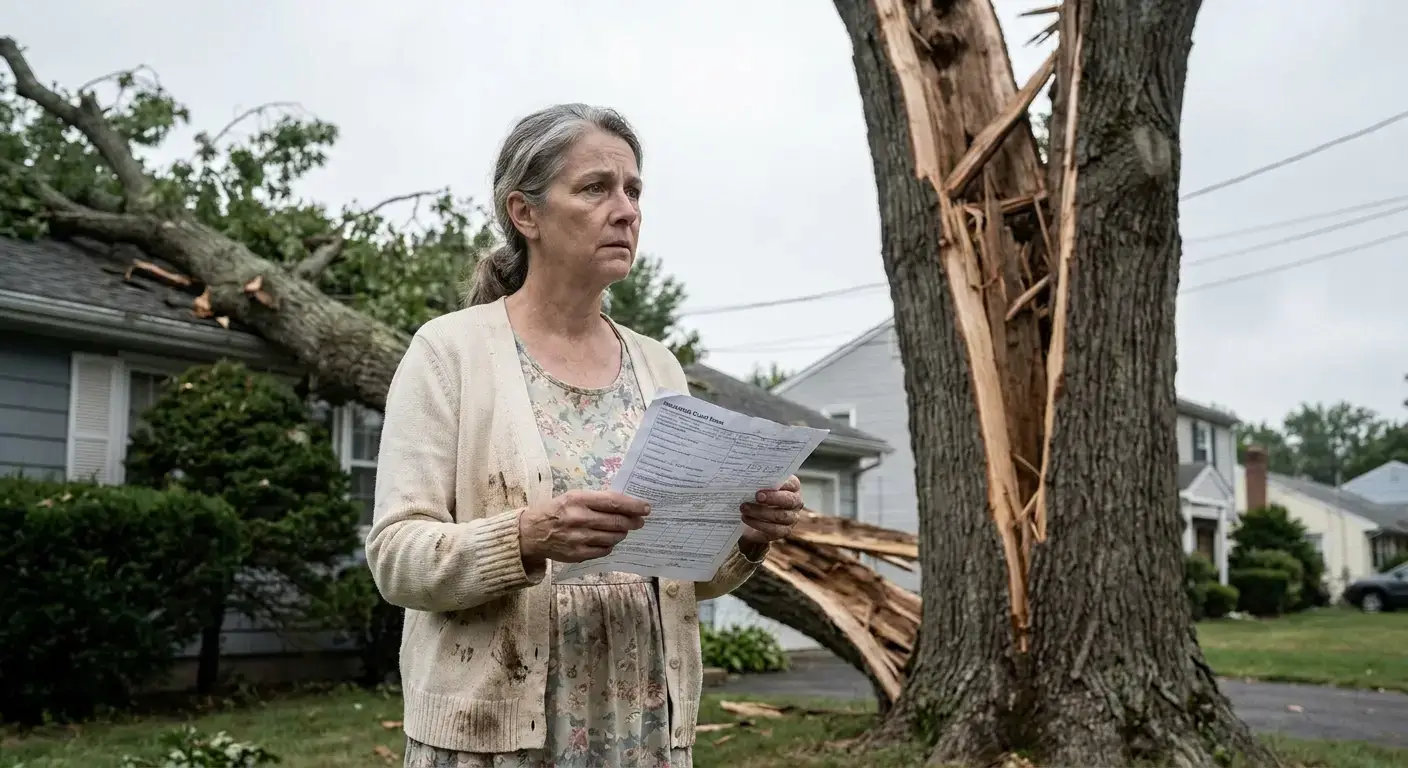
- A leaning or damaged tree that hasn’t fallen yet, even if it’s clearly hazardous. That’s your prevention job.
- Trees that fell in the yard without hitting anything (in most policies).
- Tree removal from a neighbor’s property, even if the tree came from your yard. Their carrier handles it.
To make the claim go smoothly: document everything before we start work. Get the estimate in writing with a line-item breakdown. Your adjuster wants to see “removal from structure” separated from “additional yard cleanup.” We format our storm invoices that way on purpose. The Insurance Information Institute has a clear breakdown of how homeowners insurance handles fallen trees that’s worth reading before you call your adjuster.
One more thing. Your deductible applies. If your deductible is $2,500 and the removal is $2,800, you’re paying most of it out of pocket. Know your number before the claim.
How quickly can an emergency tree service respond after a storm?
For active emergencies (tree on a house, tree on a car with someone inside, tree blocking egress), we’re rolling within the hour. For urgent but non-life-safety situations (tree across a driveway, damaged roof but house is habitable), we’re typically on-site same day or first thing next morning.
Response time depends on three things: how bad the storm was countywide, whether you’re inside our primary service area, and what equipment the job needs. During the Bristol microburst and the Torrington windstorm we worked around the clock, and both were documented on our Bristol storm response page and Torrington storm response page. When a whole town gets hit at once, the crews that get there first are the ones that own their equipment and staff their phones.
How to avoid getting overcharged after a storm
Storm chasers show up in Hartford County within hours of any major weather event. They knock on doors, quote high, take a deposit, and either do the work badly or vanish. Here’s how to filter:
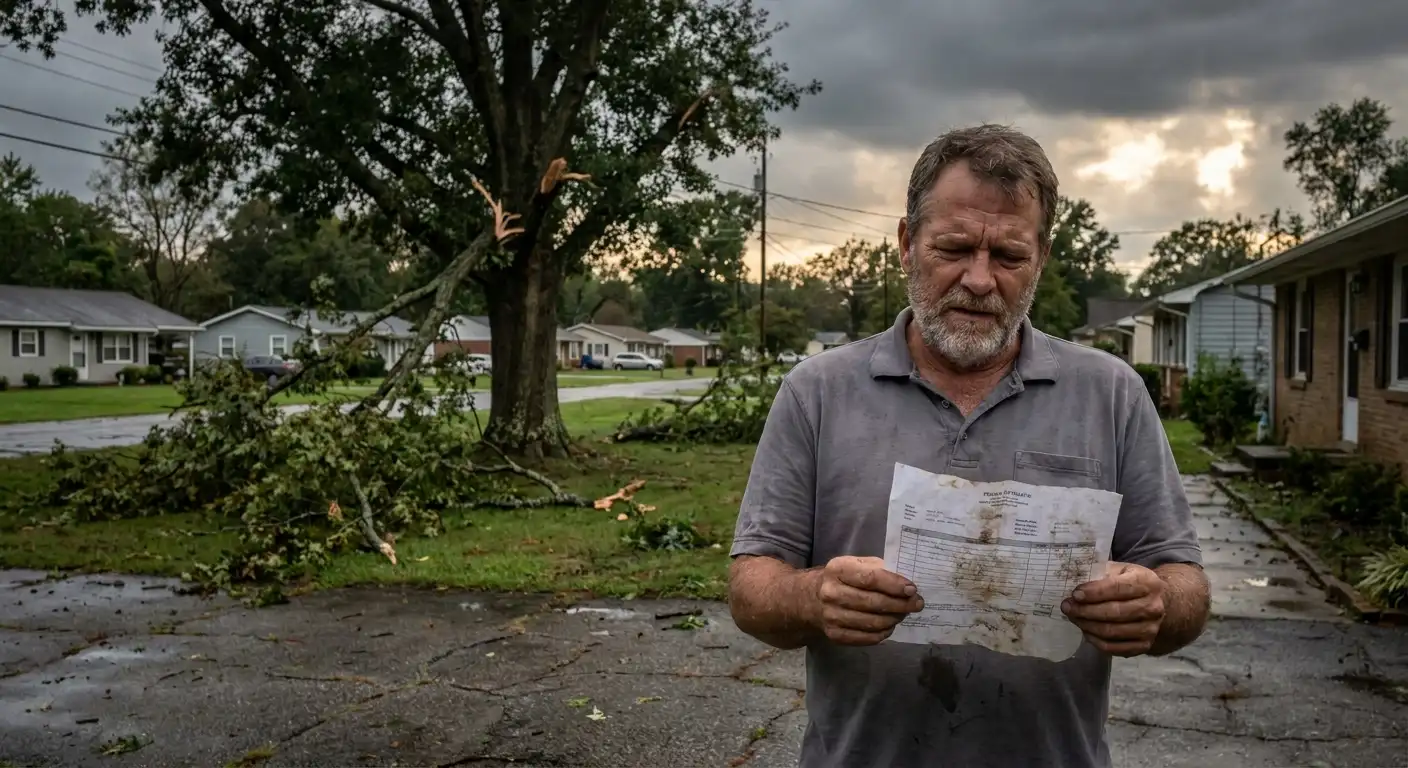
- Ask for the Connecticut Arborist License number. Any legitimate operator will have one memorized or on their truck.
- Ask for a certificate of insurance sent directly from their carrier to your email. Not a printed copy they hand you. We’re $2M insured and we send the COI on request within an hour.
- Get the price in writing before work starts. No exceptions. Verbal quotes on a storm job are how homeowners end up with $12,000 invoices for $4,000 of work.
- Do not pay 100 percent up front. A reasonable deposit on scheduled work is fine. Full payment before a saw runs is not.
What we do differently on storm work
I’ve got a degree in Arboriculture and Landscape Management from Paul Smith College. That matters because storm-damaged trees fail in specific, predictable ways, and knowing which cut releases which load safely is the difference between a clean job and a crew member in the ER. We own our crane, we staff a real 24/7 line, and we’ve removed over 1,000 trees across Connecticut. One job in Farmington last fall was 37 large white pines in a single day after a straight-line wind event.
When a storm hits, get a real estimate before you commit. We do free on-site estimates, and for actively dangerous situations we’ll walk you through what needs to happen right now and what can wait until morning.
Request a free estimate here or call (860) 839-2760 anytime. Storm damage tree removal cost varies a lot, but the number you get from us will be in writing, itemized for your insurance carrier, and honest about what the job actually needs.