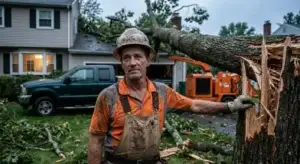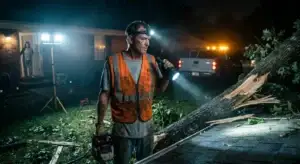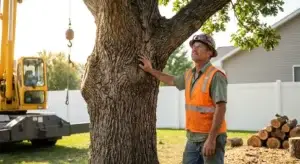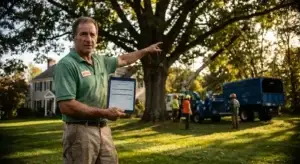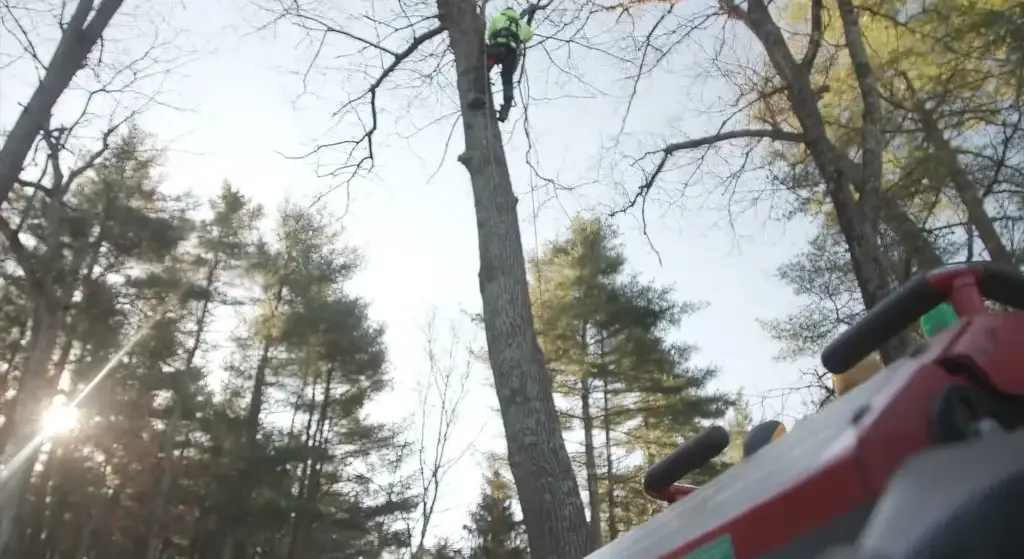
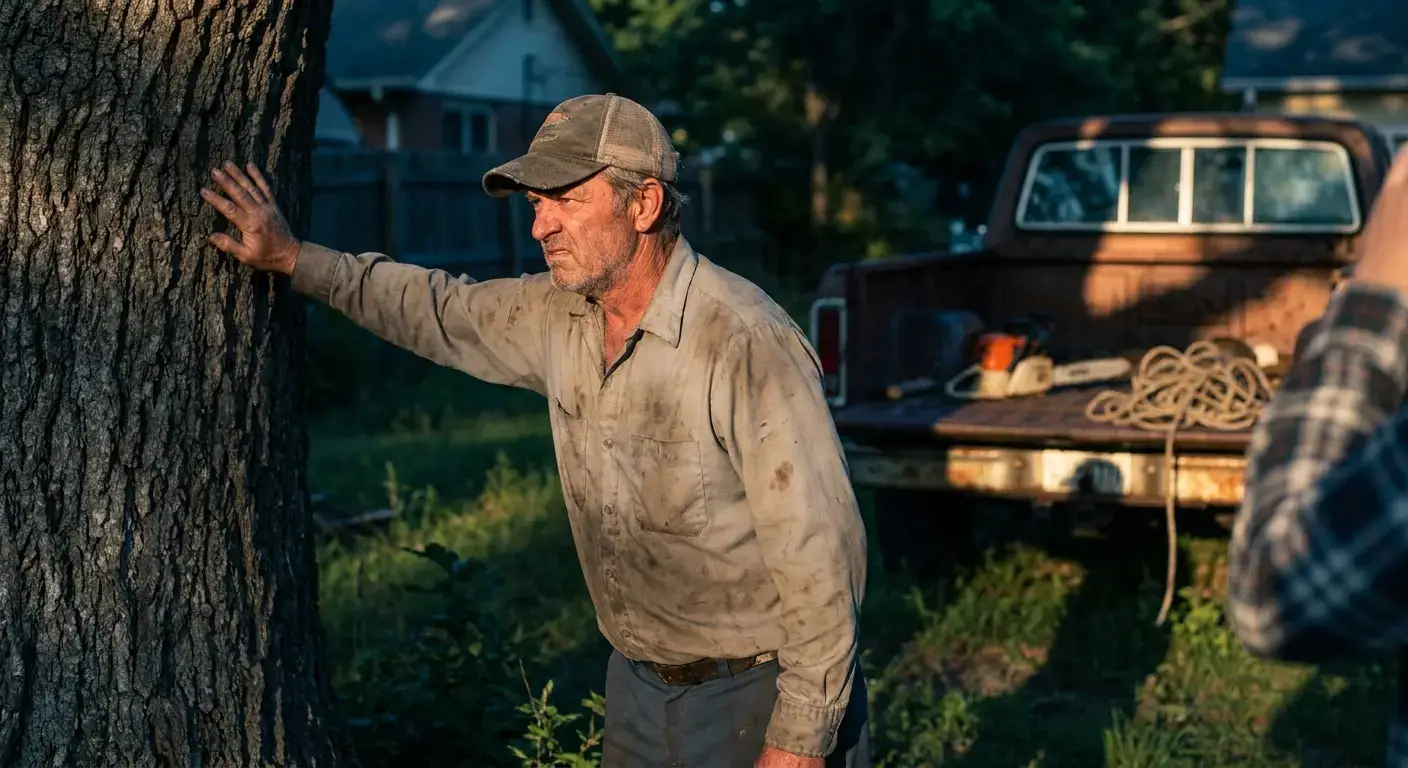
If you are trying to find a certified arborist near me, the search results will drown you in guys with a chainsaw, a pickup truck, and a Facebook page they set up last spring. Half of them are not insured. Most of them have never opened an arboriculture textbook. And when a limb goes through your roof at 2am, they are unreachable.
This is a hiring checklist built from the inside of the trade. Use it to filter out the unqualified operators before you sign anything or hand over a deposit.
What Does “Certified Arborist” Actually Mean?
The term gets thrown around loosely. There are two credentials worth knowing.
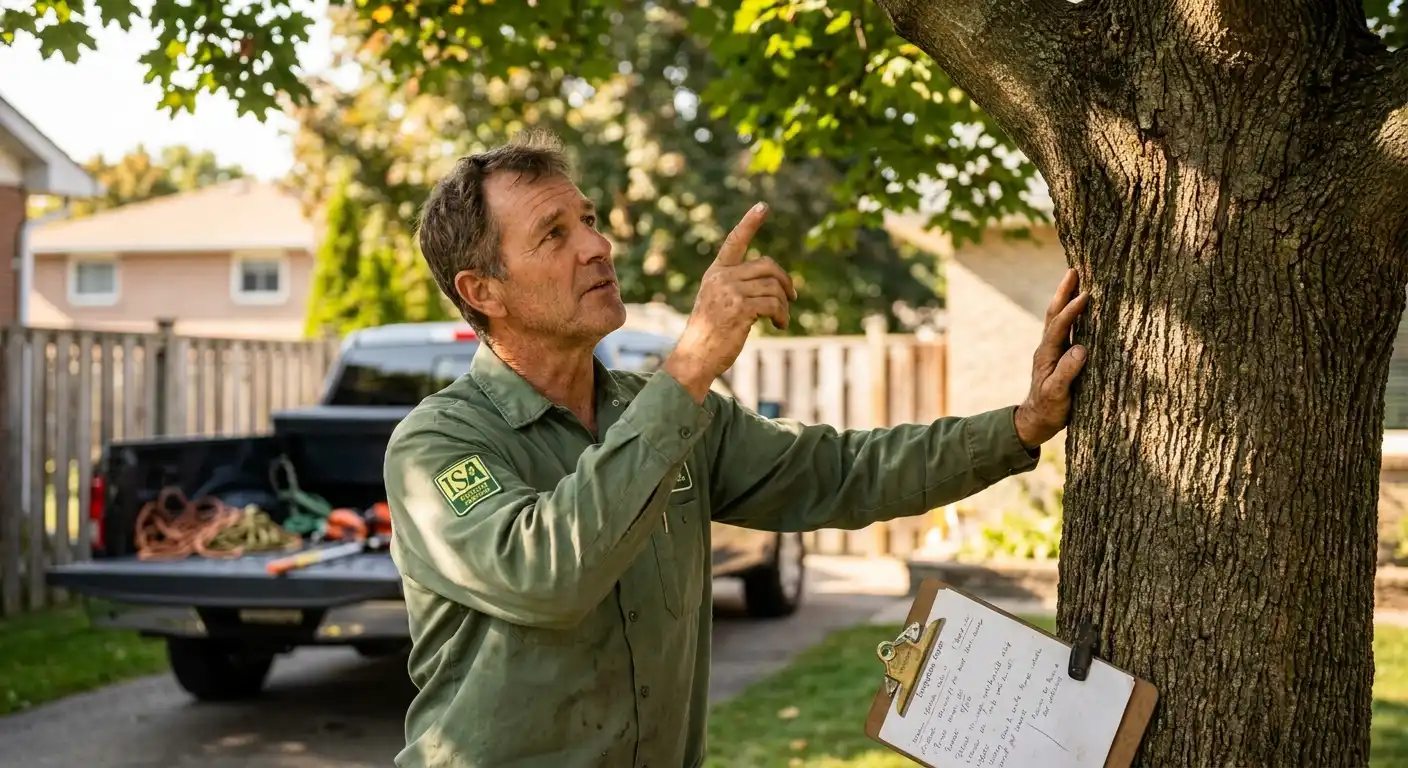
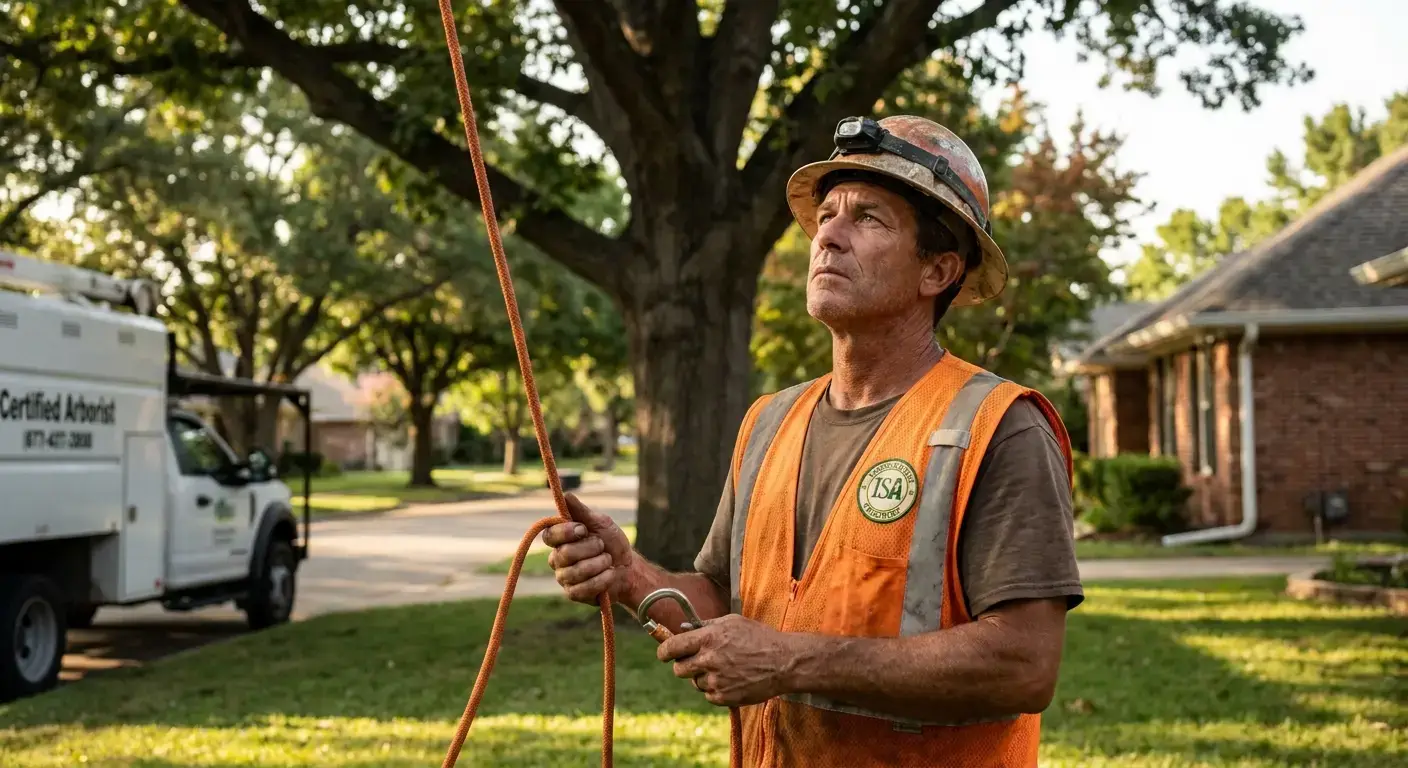
ISA Certified Arborist is the industry standard, issued by the International Society of Arboriculture. To earn it, a person has to document at least three years of full-time tree care experience, pass a rigorous exam covering tree biology, diagnosis, pruning, cabling, soil science, and safety, and maintain continuing education credits every three years. You can verify anyone’s ISA certification directly at the ISA’s public verification tool. If they claim it, check it. Takes thirty seconds.
A formal degree in Arboriculture or Landscape Management is a step beyond that. Programs like the one at Paul Smith College in New York put students through four years of dendrology, plant pathology, soil chemistry, tree biomechanics, and hands-on climbing and rigging under instructor supervision. That is the difference between someone who learned by watching YouTube and someone who learned why a codominant leader on a mature white pine is a structural failure waiting to happen.
When you find certified arborist near me, ask two questions. Are you ISA certified, and what is your formal training? A legitimate operator will answer both without hesitation.
What Questions Should I Ask a Tree Service Before Hiring Them?
Print this list. Ask every single question before you accept a quote.
- Are you ISA Certified? What is your certification number?
- What is your formal education in arboriculture?
- Do you own your equipment, or do you rent it per job?
- Can I see a certificate of insurance for both general liability and workers compensation, dated within the last thirty days?
- What is your coverage limit? (Anything under one million in liability is a red flag for large removals.)
- Are you available for emergency response, and does a real person answer the phone after hours?
- Can you show me photos of similar jobs you have completed in the last year?
- Will you provide a written, itemized estimate?
- Who handles the debris haul-off, and is it included in the price?
- Do you carry a Connecticut Home Improvement Contractor registration?
An honest crew will welcome these questions. A chainsaw-and-a-truck operation will get defensive, change the subject, or lowball the price to end the conversation. That defensiveness is your answer.
What Insurance Should a Tree Service Carry?
This is where uninsured operators cost homeowners tens of thousands of dollars. Every year.
Two policies are non-negotiable. General liability insurance covers damage to your property. If a limb crushes your fence, your car, or your neighbor’s shed, the tree company’s policy pays. Without it, you are pursuing an individual in small claims court, and good luck collecting. Minimum acceptable coverage for residential tree work is one million dollars. For large removals or crane work, two million is the standard.
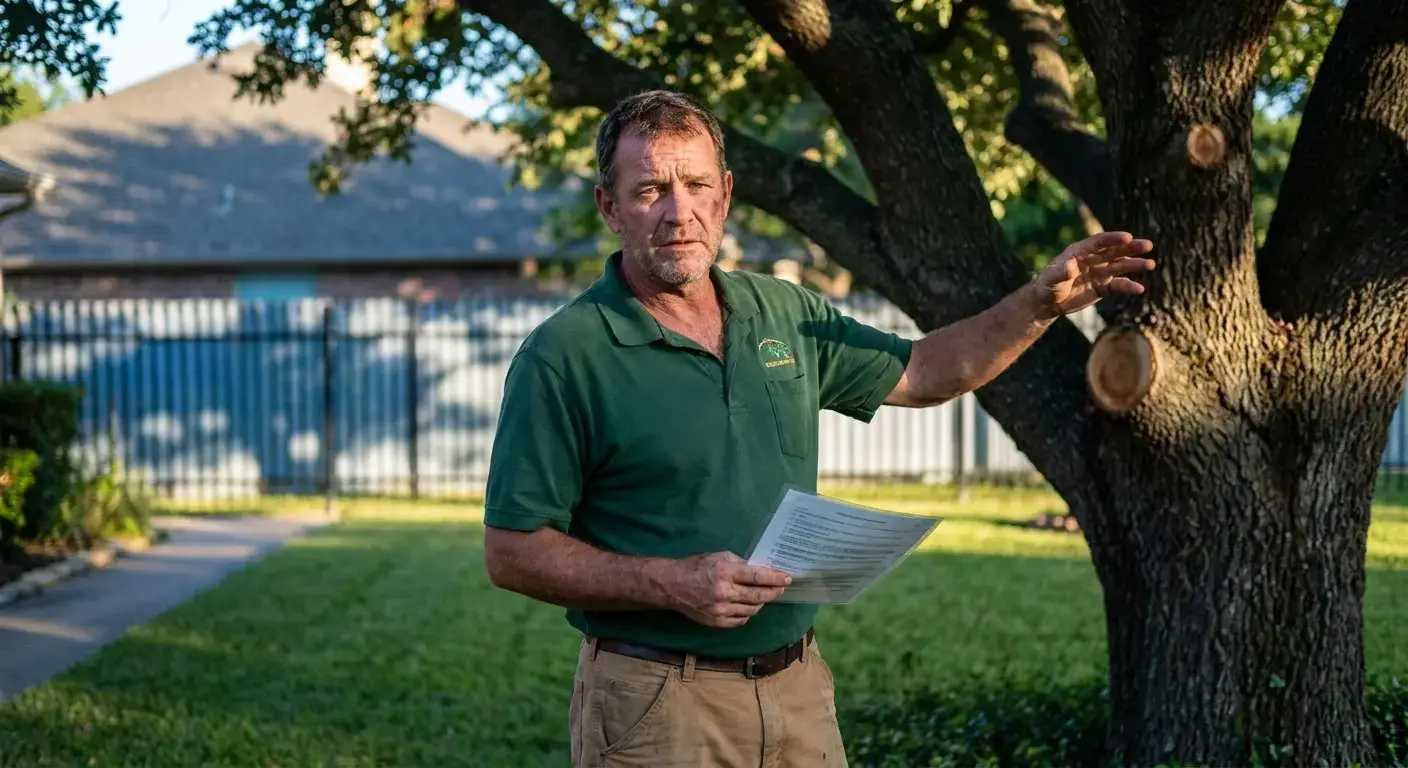
The second is workers compensation insurance. If a climber falls and gets injured on your property and the company does not carry workers comp, the injured worker’s attorney will come after your homeowner’s policy. This is not hypothetical. It happens in Connecticut every year. Ask for the certificate of insurance and confirm workers comp is listed. Do not accept “we’re all family, we don’t need it.”
Ask the tree service to have their insurance agent email the certificate directly to you, with your name listed as the certificate holder. That prevents the old trick of a fake or expired certificate. If they refuse, hire someone else.
Owned Equipment vs. Rented Equipment
This one is subtle but matters. Companies that own their own crane, bucket truck, and chipper have made real capital investments and are unlikely to disappear next season. Companies that rent equipment per job have zero overhead, which sounds efficient until the rental truck breaks down on the morning of your removal and the job gets pushed three weeks.
Owned equipment also means the operator knows the machine intimately, has maintained it, and can trust it during a high-consequence lift over a house. Rented cranes get abused by whoever had them last. On a hazardous removal, you want the guy who knows every quirk of his own equipment. See how we approach crane-assisted tree removal if you want to understand the difference in practice.
How Do I Check a Tree Company’s Credentials and Reviews?
Verification takes less than ten minutes. Do all of it.

Step 1: Verify ISA Certification
Go to the ISA’s Verify a Credential tool at treesaregood.org. Search the arborist’s name. If they claim ISA certification and do not show up, ask them for their credential number and re-check. If it still does not appear, they are not certified.
Step 2: Confirm Business Registration
Look them up in the Connecticut Secretary of State business database. A registered LLC or corporation with a real filing history is a company that plans to stick around. A person operating under only a personal name is harder to hold accountable.
Step 3: Read the Actual Reviews
Do not just glance at the star average. Read the one and two star reviews. What are the complaints? Damage to lawns? Missing debris? Ghosting after the deposit? Those are the patterns that repeat. Also look for detailed positive reviews that describe specific jobs, not vague “great service” comments that could be from anyone.
Step 4: Ask for Job Photos and a Project Map
Any established crew has a portfolio of completed jobs. Ask to see recent removals in your area. A company that has been serving Hartford and Litchfield Counties for years should be able to point to specific projects. You can browse our project map to see removals completed across Canton, Avon, Simsbury, West Hartford, Torrington, and the surrounding towns.
Step 5: Check Better Business Bureau and State Complaints
The Connecticut Department of Consumer Protection maintains records of complaints against contractors. Search the company name. Same with the BBB. Even one unresolved complaint is worth a phone call to discuss.
Red Flags That Should End the Conversation
Certain behaviors mean walk away, immediately.
- Door-to-door solicitation after a storm without a permanent local address
- Cash-only pricing or a large deposit demanded before any written contract
- No physical business address, only a phone number
- Refusal to provide insurance certificates
- Vague or verbal estimates rather than itemized written quotes
- Pressure to sign the same day for a “special price”
- Claims of ISA certification that cannot be verified online
- Trucks with magnetic signs instead of professional lettering
Storm chasers are the worst of these. After every major Connecticut wind event, out-of-state operators flood into Hartford and Litchfield Counties, take deposits, do sloppy work, and vanish. Hire local. Hire verifiable.
Why Local Matters in Connecticut
Trees in Canton respond differently than trees in coastal Rhode Island. Our soils, our common species (white pine, red oak, sugar maple, hemlock), our storm patterns, and our local ordinances all shape how removals should be planned and executed. A crew that has worked hundreds of properties across Hartford and Litchfield Counties knows which towns require permits for street-side removal, which utility companies to coordinate with, and how sugar maple root systems interact with old fieldstone walls.
That knowledge does not come from a textbook. It comes from years on the ground in the same region. If a company cannot name the towns they have worked in and describe specific project conditions, they do not have that experience.
The Cost of Hiring Wrong
According to the U.S. Occupational Safety and Health Administration, tree care is one of the most hazardous occupations in the country, with a fatality rate several times the national average across all industries. When an uninsured, untrained operator is dropping a sixty-foot pine near your house, the risk is not theoretical. You can review OSHA’s tree care safety guidance to see the standards professional operators are required to follow.
Hiring wrong looks like this: your fence caves in and the operator is uninsured. Your lawn is torn up by tires and the crew shrugs. Debris sits in your yard for two weeks after a promised same-day cleanup. Or worst, someone is injured on your property and your homeowner’s policy takes the hit.
Hiring right looks like this: a written estimate. A certified arborist walking your property and explaining the plan. Owned equipment showing up on time. A clean property when the crew leaves. A phone call answered on the first ring if you need them again.
Your Hiring Checklist Recap
Before you sign anything, confirm:
- ISA Certified Arborist on staff, verified online
- Formal arboriculture education
- Certificate of insurance emailed by the insurance agent, showing at least one million general liability and current workers comp
- Owned equipment, not rented per job
- Written, itemized estimate
- Verifiable local project history
- Real reviews with specific job details
- Connecticut Home Improvement Contractor registration
- 24/7 emergency response with a real human on the line
If a tree service checks all of those boxes, you have found a professional. If they do not, keep looking.
Ready to Get a Real Estimate?
Webb Tree Services is based in Canton and serves Hartford and Litchfield Counties. Matt Webb holds a degree in Arboriculture and Landscape Management from Paul Smith College, we own our crane, we carry two million dollars in insurance, and we answer the phone twenty-four hours a day. If you want to skip the chainsaw-and-a-truck outfits and work with a trained crew, request a free estimate or call (860) 839-2760. Written quote, no pressure, no games.