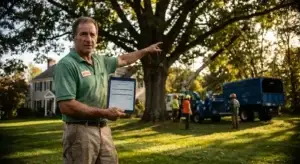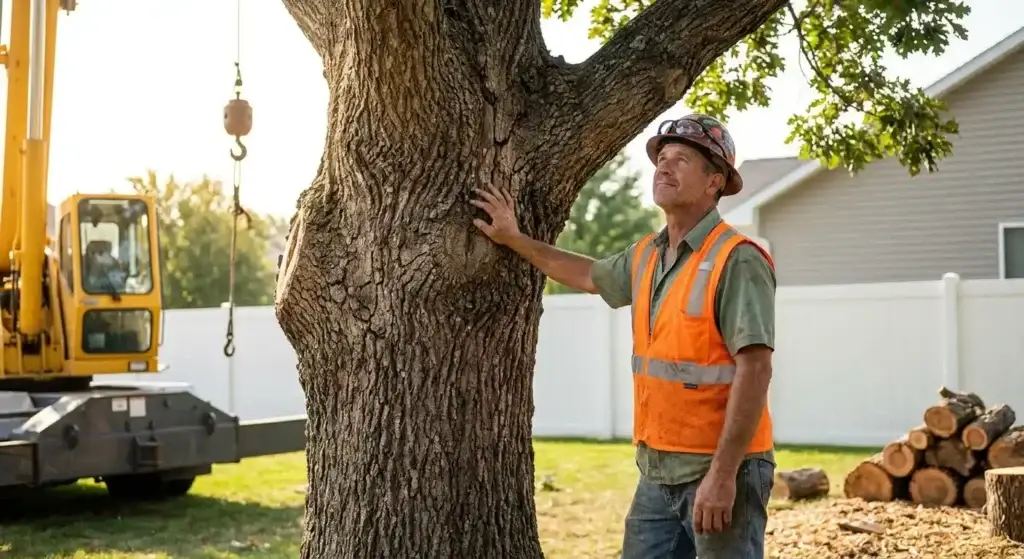
Crane tree removal cost is the number most homeowners flinch at first and thank us for later. When a rotted white pine is leaning over a bedroom or a storm-cracked oak is pinned above a garage, a crane is not a luxury upgrade. It is often the cheapest way to get that tree on the ground without a second disaster.
I have been running crane picks across Hartford and Litchfield counties for years, and the same conversation happens on almost every estimate. The homeowner sees the crane on the invoice, assumes it must be adding thousands to the bill, and asks if we can just climb it instead. Sometimes we can. Often we should not. Here is the honest math.
How much does crane tree removal cost in Connecticut?
For most residential jobs in our service area, crane tree removal cost runs between $1,800 and $6,500 per tree, with the majority of single-tree hazardous removals landing in the $2,500 to $4,500 range. Multi-tree days, like the 37 white pines we cleared in a single day recently, drop the per-tree price significantly because the crane setup gets amortized across the whole job.
What drives the number:
- Tree size and weight (a 90-foot pine picks differently than a 60-foot maple)
- How close the tree is to the house, wires, or septic
- How far the crane has to reach from its set-up spot
- Whether the trunk is sound or rotted (rotted picks require smaller, more careful sections)
- Debris volume and haul-off distance
Every estimate we give is free, flat-priced, and written down before we touch a saw. No hourly surprises.
When does a job actually require a crane?
Not every tree needs one. A healthy tree in an open yard with room to fell it? A skilled climber and a ground crew handle that fine. The crane earns its keep when any of the following are true:
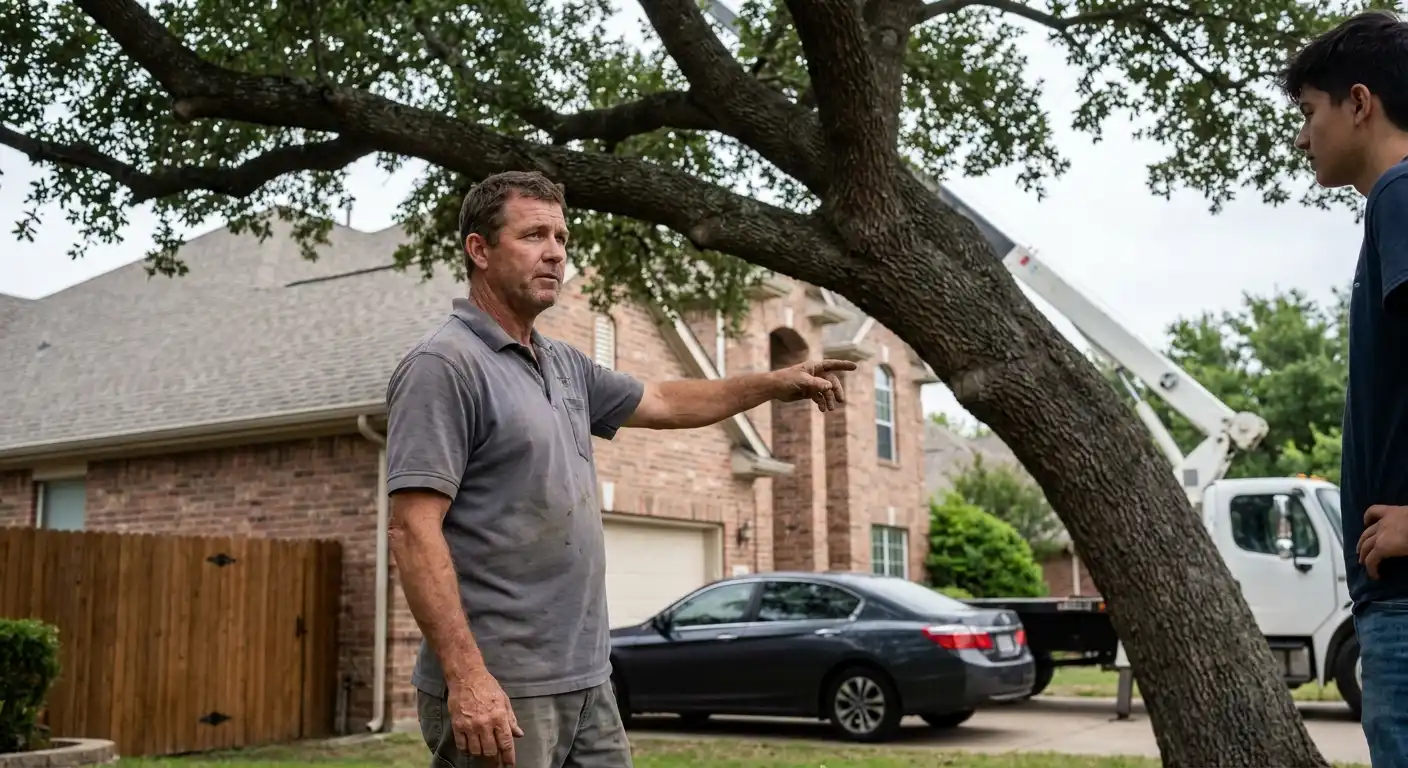
- The tree is leaning toward a house, garage, pool, driveway, or septic field
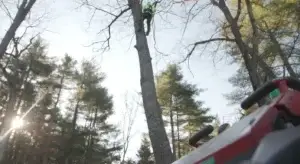
- The trunk is rotted, cracked, or hollow and cannot be safely climbed
- There is no drop zone big enough to fell sections without hitting something
- Powerlines are in play
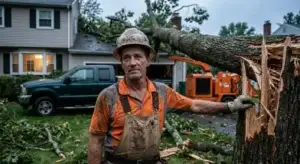
- The tree came down in a storm and is under load, tangled in other trees, or resting on structures
Our Brandon Run crane project in Bristol is a textbook example. Two large hazardous trees, tight residential access, zero margin for a bad drop. Climbing would have taken two full days and put a climber in a compromised tree. The crane pulled it apart in hours with the roofline untouched.
Is crane tree removal more expensive than conventional removal?
On the invoice line? Yes. On the total real cost? Almost always no. Here is what people forget to price in:
1. Climbing labor is expensive and slow
A climber sectioning a big hazardous pine can spend six to ten hours in the tree. That is billed labor, plus a ground crew of two or three people the whole time. A crane pick often does the same tree in ninety minutes with a smaller ground crew. Fewer man-hours, less risk, lower total price.
2. Property damage risk
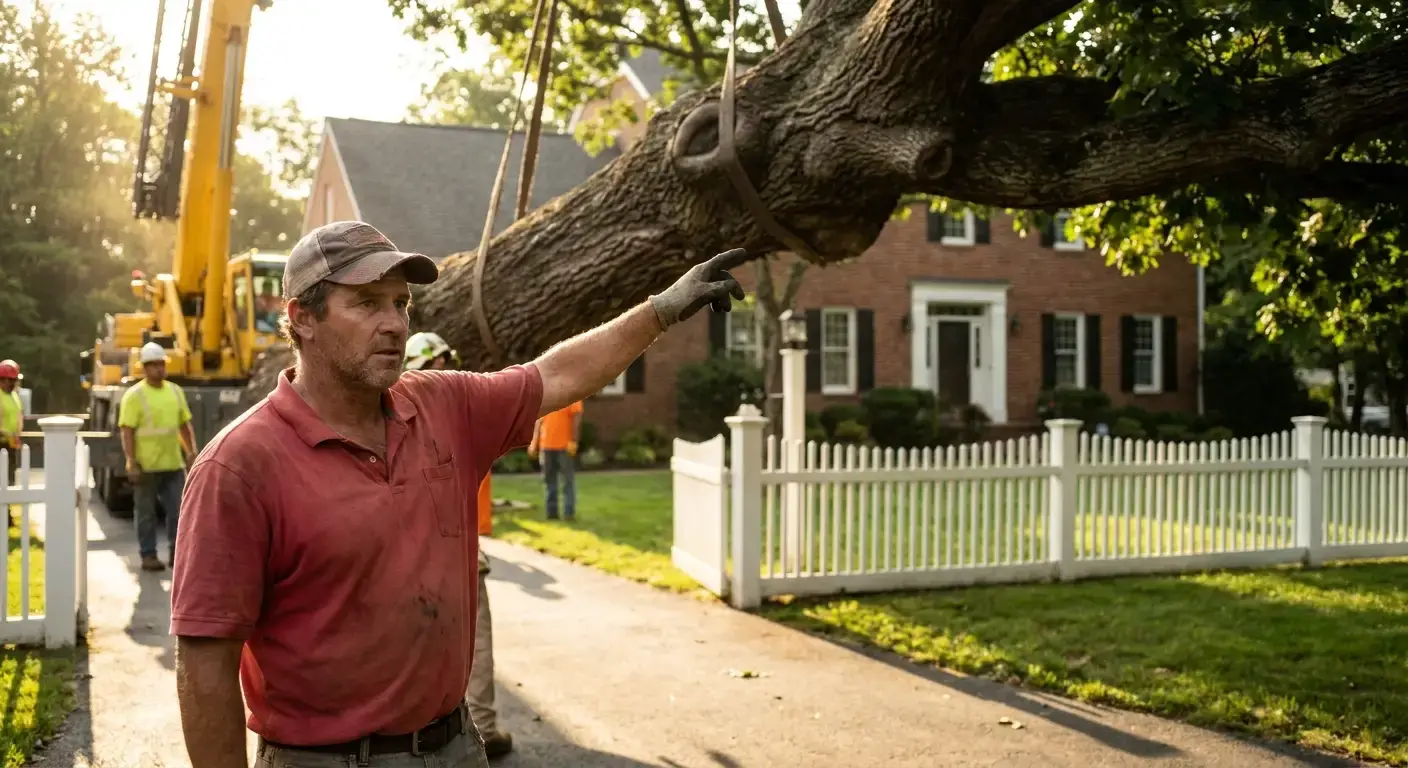
Even a controlled section drop can crack a walkway, tear up a lawn, or dent a fence. A crane lifts the wood straight up and away, then sets it down where you want it. The number of driveways I have watched a crane save is not small. One repaired stamped-concrete apron alone can cost more than the crane fee.
3. Insurance and liability exposure
If a climbed section swings wrong and takes out a roofline, everybody’s insurance gets involved. Even fully-insured crews (we carry $2M in liability plus workers comp) prefer to avoid claims. Cranes take the guesswork out.
4. Crew safety
The single biggest hidden cost of climbing a compromised tree is a worker getting hurt. That is not a line item you want on your job. A crane pick keeps everybody on the ground.
What are the advantages of using a crane for hazardous removals?
Beyond the cost math, crane-assisted removal changes what is possible:
- Precision. We can lift a 4,000-pound section over a roofline and set it in the street without touching the shingles.
- Speed. Storm-damaged trees on your house get cleared same-day instead of over a week.
- Access. Tight backyards with fences and hot tubs are workable without dismantling anything.
- Cleanliness. Less ground impact means less lawn repair, less mulch replacement, less mess.
- Safety. The tree never has weight on a climber.
According to the Occupational Safety and Health Administration, tree work is one of the most hazardous occupations in the country, with falling limbs and struck-by incidents leading the injury data. That is not a stat we take lightly. Mechanized equipment reduces those risks, which is exactly why we bought our own crane instead of renting one job to job.
Why owning the crane matters
Most tree companies who offer “crane service” are calling a crane rental company, waiting on a schedule slot, and marking up the rental. That is fine, but it costs you time and money. Owning the crane means:
- No rental markup on your bill
- We show up on our schedule, not the rental yard’s
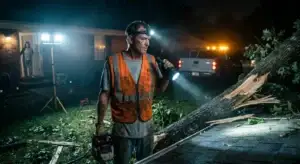
- Emergency storm calls at 2 a.m. actually get answered with a crane on the truck
- The operator is our operator, working with our crew every single day, not a stranger
That last point matters. Crane-and-crew coordination on a hazardous pick is a rhythm. Doing it with the same team every time is why our jobs finish clean.
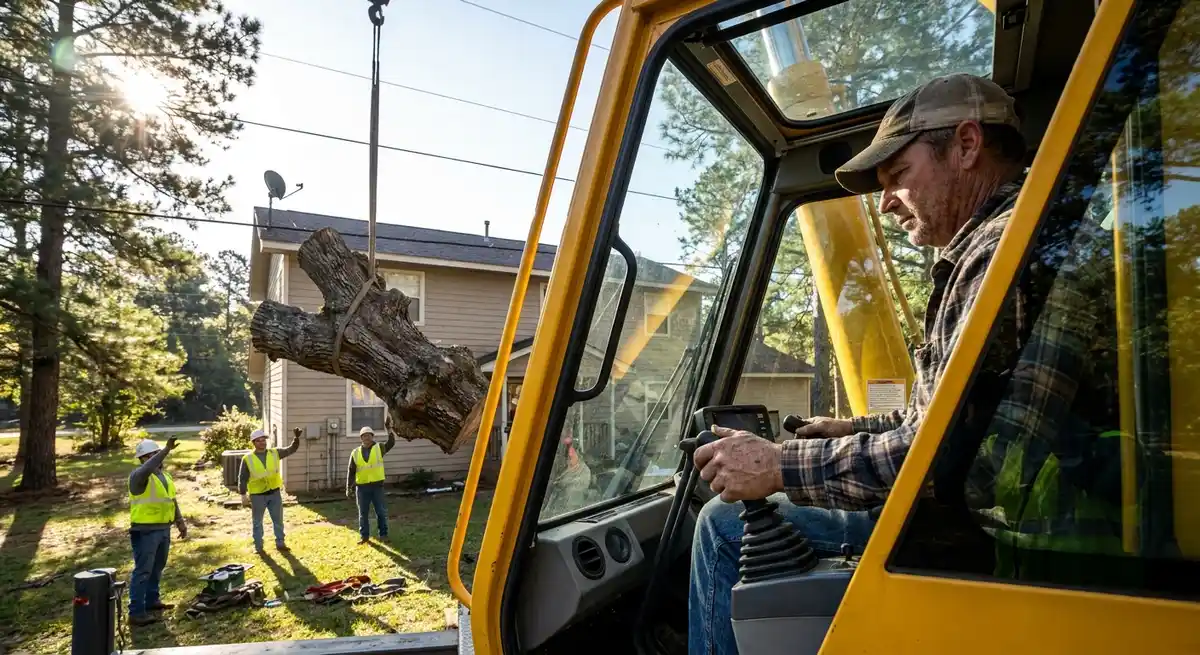
Storm work and 24/7 emergency response
When a nor’easter puts a red oak through your roof, crane tree removal cost is not the first question. Getting it off the house before more water gets in is. We run 24/7 emergency response across Hartford and Litchfield counties for exactly this reason. Recent examples: our Torrington storm response cleared multiple hazardous trees from residential properties inside 24 hours of the call. That is only possible because the crane is ours and the crew is on call.
How to know if your job needs a crane
Send us a couple of photos and a rough description of the tree, the target (what it is leaning toward), and access. We can usually tell inside a text thread whether crane work is warranted. If it is, we schedule a free on-site walk, plan crane placement, and write you a flat price. No hourly billing, no surprise change orders.
The bottom line on crane tree removal cost
Crane tree removal cost looks bigger on paper than climbed removal until you add up the hidden costs of the alternative. On hazardous, tight-access, and storm-damaged jobs, a crane is faster, safer, and typically cheaper once property damage risk and labor hours are factored in. That is not marketing. That is the reason we spent our own money to own one instead of rent.
If you have a tree you are worried about, in Canton, Torrington, Farmington, Simsbury, West Hartford, or anywhere in Hartford or Litchfield County, get a free written estimate. We will tell you honestly whether it needs a crane or not.